Tuesday, December 13, 2022

The Next War by Ambush Alley - Review

It's been quiet around Ambush Alley, the creators of award-winning classics like Ambush Alley, Force on Force, and Tomorrow's War, for a long time. 


But now there's The Next War! 

For the time being, this new edition will only be made available as a print-friendly pdf (no images) and is therefore called the "development draft edition." 

However, it is a complete rule set that has already been thoroughly thought-out and play-tested. The intention is to test them on the market and to issue the eventual final and complete edition only on the basis of feedback. So, in the meantime, you can buy an excellent rule set for a sympathetic price. 

TNW is a so-called "big skirmish" rule set, in which there are dozens of figures per side on the table. The game also handles vehicles, mainly as transportation, support and threat to the infantry present on the table. This is not a game for large tank battles, but a game where infantry for example can chase a tank or vice versa.


What's so special about The Next War? 

In a business where standard dice and a fixed turn order are the first two of the 10 commandments of game design, this game throws both out of the window. In addition, it concentrates on the modern period with an extension towards Scifi, which is also not a common combination. Where so far AA has worked this into separate rulesets, The Next War contains all these elements at the same time.

Appearance isn't everything 

What can I say about this? It is a print-friendly pdf and so there are no frills. Everything is functional.

So, those rules? 

TNW is based on the Ambush Alley reaction system. There is actually no turn order. Every turn players dice for the "active" player who is the first to do something. As soon as he activates one of his units, the other "inactive" player can respond. Because the inactive player is actually not inactive at all! 

Players test against each other (highest roll wins) whether the action or reaction takes place first. Is the active player completely at the mercy of the inactive player? No, because he can prepare for reactions by putting units in Overwatch at the beginning of his turn. They can try to interrupt or prevent a reaction. 

As a result, a simple movement of figures can have dynamic consequences. They can be shot at by units of the inactive player before or while they are moving. If they win their test, they can shoot back. The inactive shooting units, in turn, can also be shot at by active player units in Overwatch before they can perform their action. The reaction can also be used for other actions such as ducking into coverage and other things. If the active player has activated all the units he wants (maybe he keeps a few to respond to the inactive player) it's the inactive player's turn and the same interaction is repeated.

This cycle of action and reaction is finite. Troops cannot respond to return fire and Overwatch, may not shoot more than once per turn at the same enemy unit, and figures that have already been activated may not be activated again. 

But just as well, a single movement can provoke quite a firefight. 

What about those dice? 

TNW uses almost no dice modifiers. Instead, it uses dice with 6, 8, 10 and 12 sides. The better the quality of the troops or the cover, the "higher" the dice. In principle, a 4+ is a success. Most of the rolls are "opposed", made against each other. This means that a result of 4+ is usually a hit unless there is a Defense throw of at least 4+.

What's good? 

The rules are clear, uncluttered and displayed in a logical order in a pleasantly readable font and each paragraph contains a clear summary in an easy-to-find text block. 

The rules start with a table of contents that is so detailed that it can actually double as an index. There are scenarios, ready-made units and vehicles and the so-called Fog-of-War cards, which are intended to make scenarios a bit more unpredictable.

There are different classes of troops, from angry civilians to elite commandos and all kinds of specific traits for troops, some of those specific to SciFi games. 

An additional advantage is that the rules are retro-compatible with all scenario books that AA has ever released. Arguably the best in the entire hobby.

What could be better? 

The rule set is very sparse. There are no images and no explanatory diagrams. So it is aimed at the experienced player, although knowledge of previous games from AA is not required. 

And if you want to have the final rules, you have to buy it again. 

The reaction system is very dynamic but does produce a certain complexity that is not to everyone's taste. 

Conclusion 

All in all, a fascinating rule set that delivers games with lots of suspense and suddenly exploding turns full of action. As far as I'm concerned, highly recommended. An AAR will follow. 

The Next War Development Draft 

Ambush Alley Games 2022 

wargamevault.com 

For more info: http://www.ambushalleygames.net/

Thursday, November 10, 2022

Dealing with OOOH Shiney! syndrome in 5 simple steps

We wargamers are often accused of suffering from the so-called Ooooh Shiny! syndrome; we see something interesting in a movie or on the web and bang! there you have a new project. If you don't watch out you'll be up to your neck in unfinished projects in no time. 

People are often a bit worrysome about that, but let's be honest: we can't do anything about it anyway! So let's embrace it as a fun part of our hobby and try to live with it as good as possible. So below you will find 5 Simple Steps  to deal with this: a tried and proven method in Casa Pijlie. This is experience talking! 😉 And pay attention: buying things doesn't happen until step 3!

Step 1: Go deep!

Long before I buy anything I always try to go deep and find out as much as possible about a project. When it is historical, there is often a mass of books, movies and documentaries to be found and enjoyed. Be it fantasy, I go to books and movies and it helps to re-watch movies. Or to Google similar stuff. That makes you ponder things, grow ideas and become enthusiastic and inspired. And no cash has been spent so far, or it has been on books.....

Step 2: Then go wide!

Think about the kind of scenarios one could play. Or campaigns. And with whom. Think about the terrain you might need for the project. Ask around if anyone would like to start this project too. Wargaming is, after all, a social hobby and one needs opponents in any case. Starting a project with other people enhances the odds that you might realize something. And that something will usually be bigger than you would be able to do on your own. 

Not unimportant: can you combine it with another ongoing or finished project? Especially in the first case you will prevent earlier projects to fade from memory. They might be a great jump-off point for that new and even more enjoyable project!

Step 3: Go for minimal completeness

The important word in this title is "minimal". Ask yourself what you would need to make this project a building, painting and playing experience (assuming you like all that, of course) that you can enjoy and look forward to completing? If you can build a nice army with 5 units, you don't have to buy enough figures to make 15! Create a triple wish list with a minimal, an expanded and a final list of things you would like to have. 

Doing this in cooperation with other people obviously reduces the investments in time and money and increases the possibilities. And you can motivate each other to work on it, exchange experiences and results and help each other. Look if you have projects that you really don't (or can't) do anything with anymore and sell things from those to finance new projects. Your old stuff ends up with people who  will enjoy it and this also reduces the costs of a new project.

And only now will you start buying stuff J

Step 4: Start working on the smallest possible next game

I always like to start with constructing the smallest possible first game from the start to finish. No more. No less. With small steps you often cover large distances. 

That "minimal completeness" will help you here. When you have limited yourself to those 5 units, it will not be so intimidating to paint them. And that in turn helps to keep your motivation afloat. Building on existing parts of your collection obviously speeds this up, but even if you do have to start from scratch, it's still nice to know that you will be able to play as soon as those first units are finished. And if that first game is a lot of fun (and of course we'll assume that by then) that will provide motivation to build and paint more things.

When you've gone through your first "minimal" list completely and still like it, now is the time to expand your purchases. Paint a unit, buy or build a new piece of terrain, write a new scenario that you may need specific things for. This way your project grows as long as you enjoy it. And if ever it is really blocked by something else, then at least you will have it finished so far. And start again at step 1!

Step 5: Don't do Deadlines

This seems to be the last step, but actually this is extremely important for all the aforementioned steps. This is a hobby, not a job. There is no need to deliver a performance. It just has to be fun. A project can't fail either. It can stall for a shorter or longer period of time for all kinds of reasons. But it doesn't matter for how long it does so. If you do it right, there are really only shorter or longer running game projects, which always end up being completed or will get merged into a new one. 

See step 1. Have fun.


Tuesday, October 25, 2022

More Hellboy stuff: Kickstarter Wave 2

The first paintjobs from wave 2. 

Hellboy drinking with skeletons is a small diorama that actually has a function and corresponding card to use in the game. The Hellboy figure himself can be lifted out of the diorama base and stands on its own base. 

Drinking with skeletons 


Nimue 

Hammerhead 


Thursday, October 6, 2022

Solomon Kane Red Shadows and Castle of the Devil painted and done!

 And the final Solomon Kane boxes are now done. Red shadows and Castle of the Devil.

Le Loup

Le Loup in tropical attire

La Costa

Shopkeepers

African Group picture

King Songa

N'Longa

Random African redshirt

Warrior


Gulka the Gorilla Hunter 


Gorilla

CotD group picture

Seriously derailed bodybuilding project

Barmy Baron Von Staler


Thursday, September 15, 2022

FInished Painting Solomon Kane: America The New World


Group portrait
Salem Witches
Salem Witch and creepy twins


The Devil


Indians

Chief


Shaman

Warrior

Champion

Wendigo


Friday, August 26, 2022

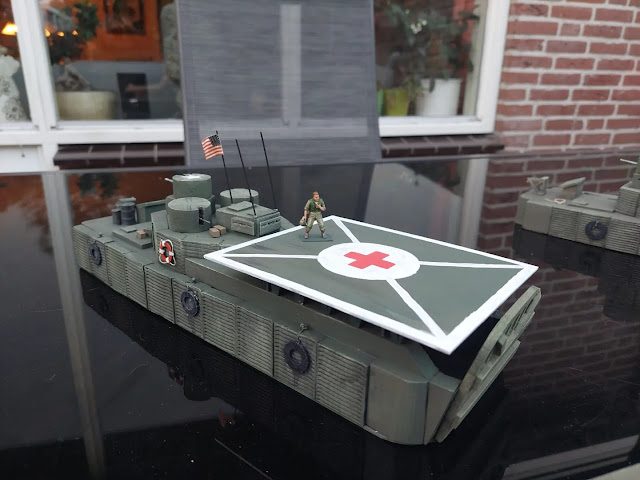
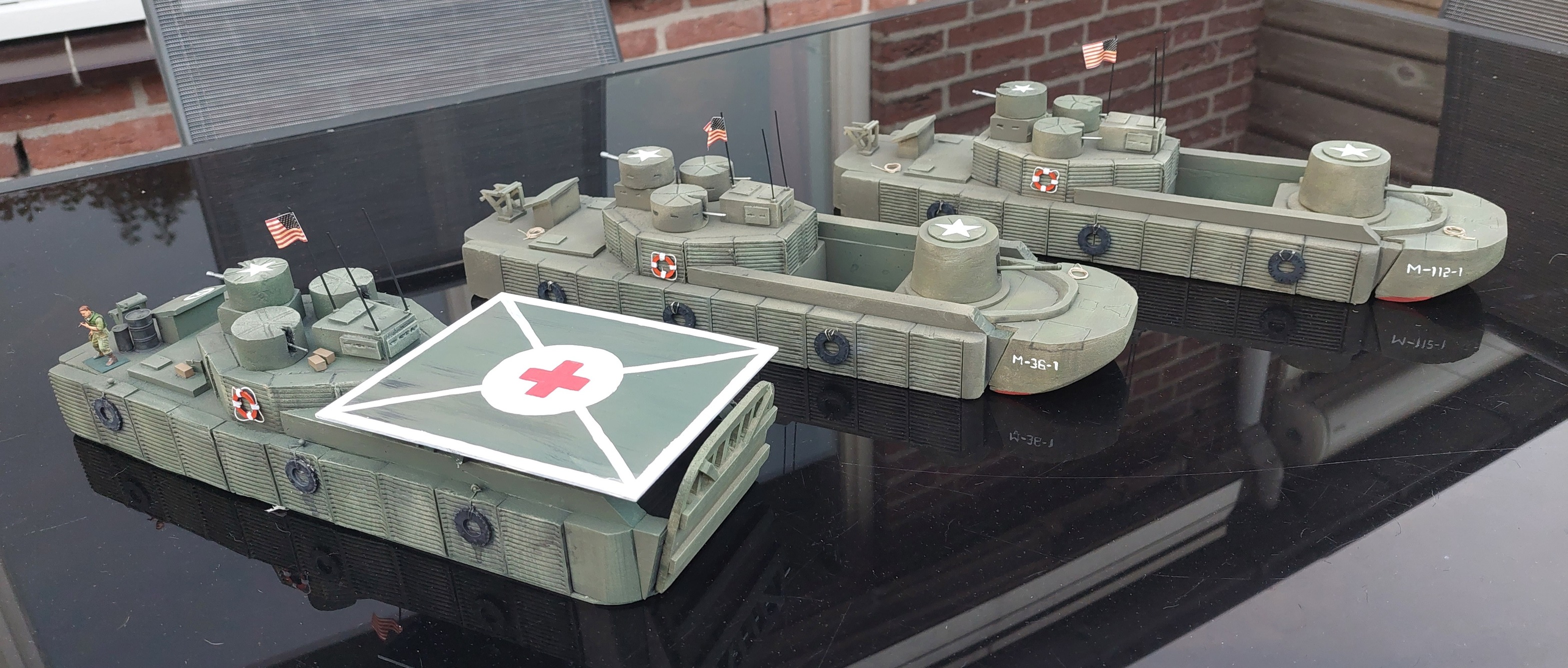
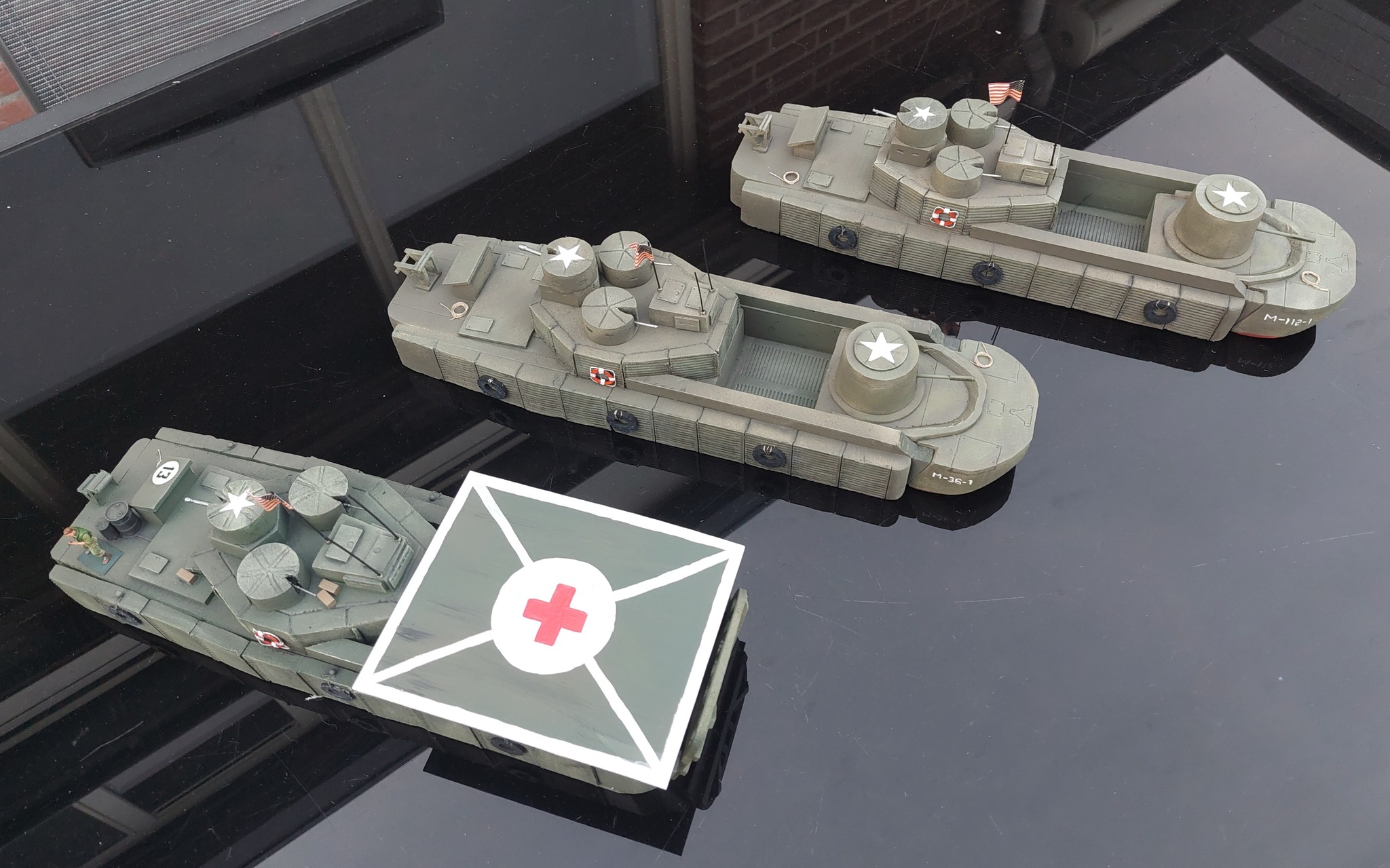
Finishing the Tango boats

The Tango boat was a project I didn't need, wasn't planning on but started just because I wanted to see if I could. Wherever will I store it? 

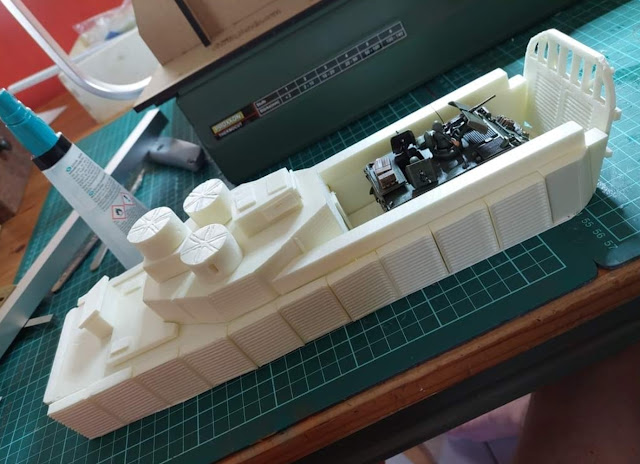
For convenience I decided to line up the entire development and build of the three Tango boats. This was a quickly escalating project....

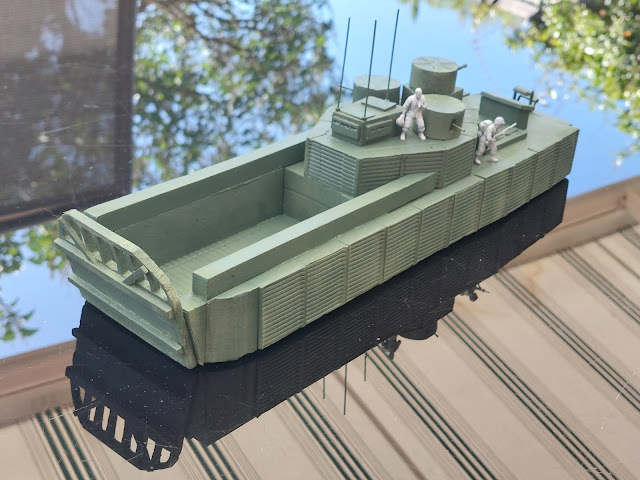
I started with some research. There are ample pictures available of the boats and their several configurations of which I built three: the landing craft, the monitor and the medivac version with the helicopter deck. 

Rare colour picture of a Tango


The next step was to find a good scale drawing and measure everything up to 1/50 scale to go with my mainly Empress Vietnam figures. 


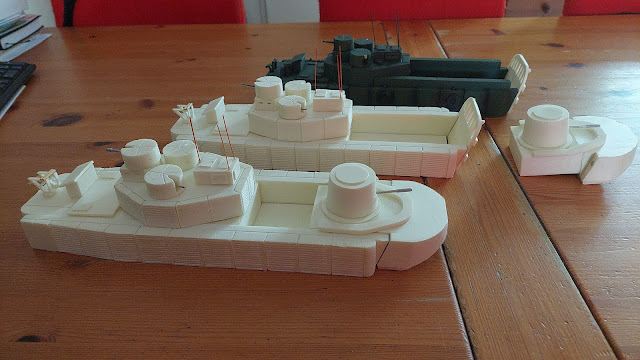
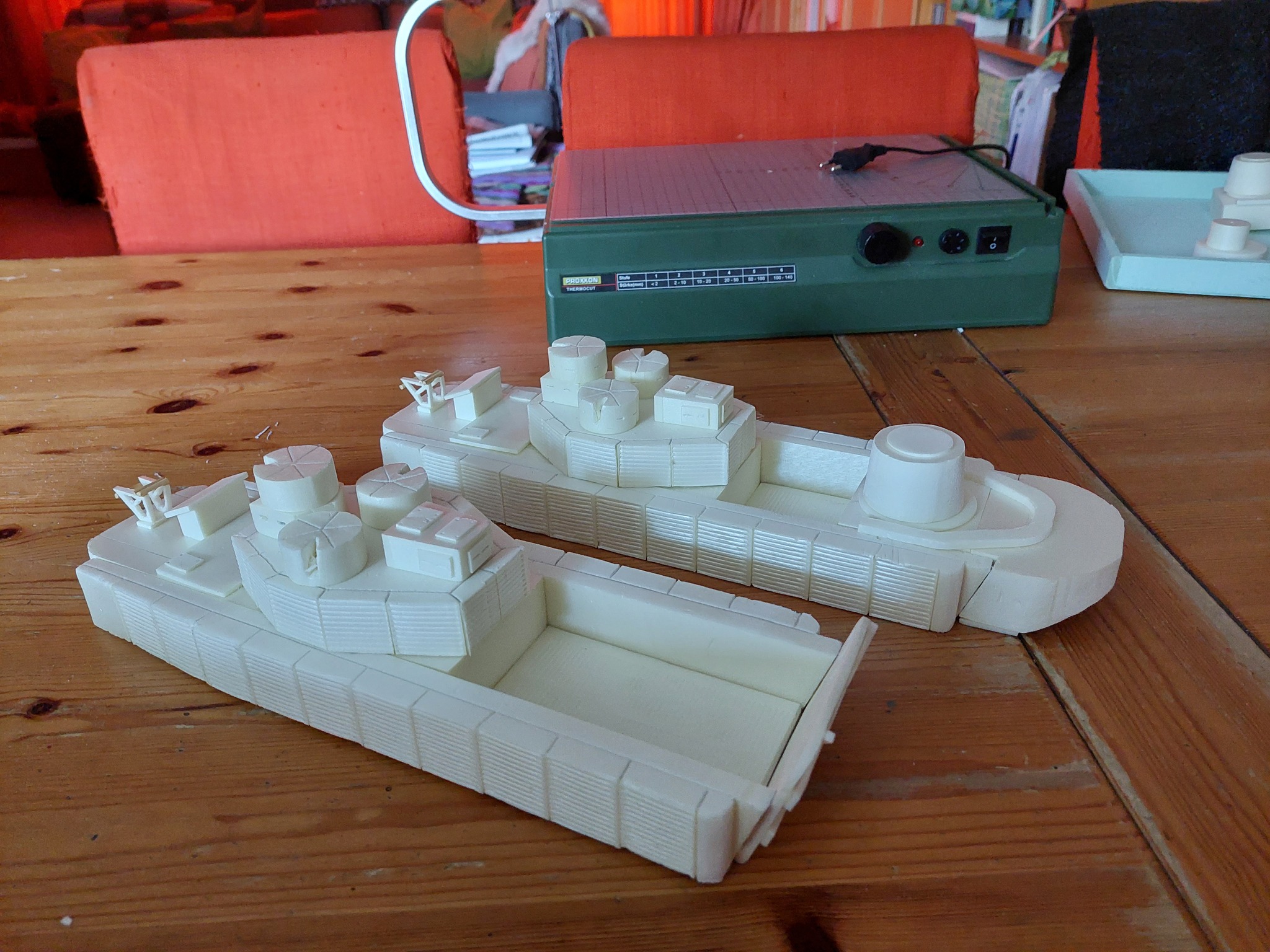
I then proceeded to divide the boat into parts I could cut from XPS styrofoam. This process is a skill in itself but let's suffice in this spot that I learned a lot from the first build. 

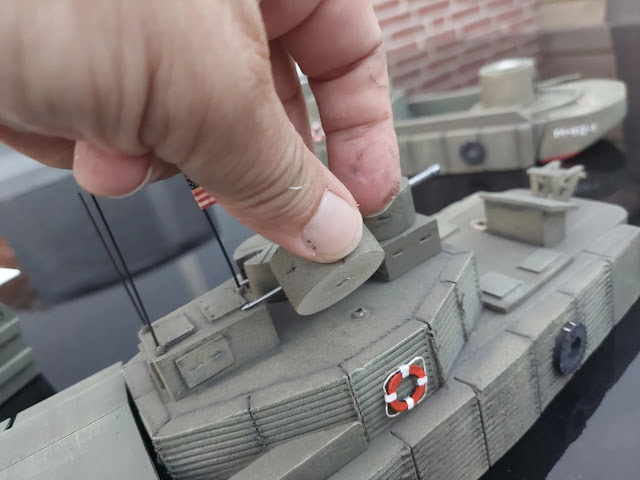
After that, I decided to build two more with re-engineered hulls (6 in stead of 24 parts) and thought up a way to alter their function between landing craft, helicopter/medivac vessel and monitor. 

I also took some liberties with the modelling. I dropped the hand railing along the sides for being to vulnerable and because it would get in the way with the figures. To facilitate easy replacement of the armoured landing craft roof and the helicopter deck I installed two ridges along the front cargo hold that weren't there in reality. But is was a sturdy and easy way to create a base for roof and heli deck, would be partly invisible in those configurations and not disturbingly present in the monitor configuration. 

The wheelhouse in reality was actually a rather frail looking skeleton with armoured hatches. The roof was apparently sometimes canvas, sometimes plate.  For sturdiness I decided to feature it in closed condition with a plate roof and closed hatches. 

The first build, fitting a 1/50 M113 in the hold. 

Guns and antennae added as well as the minesweep rig on the aft deck. 


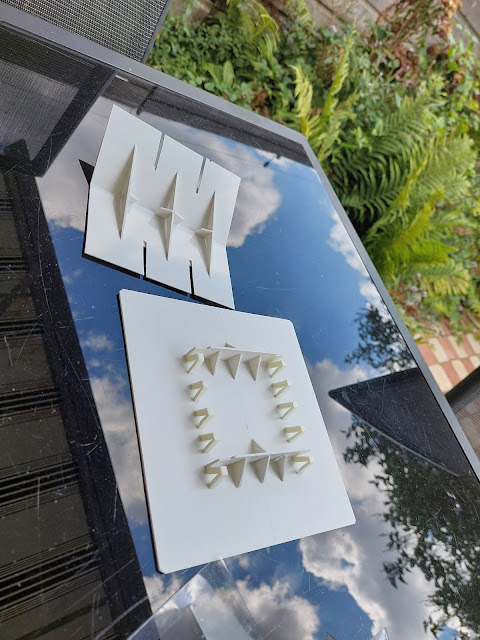
I forewent any hinges on the bay door. It closes on magnets and is simply laid in front of the ship when opened. 


First paints on the roofless hull. 


First builds of armoured roof and heli deck. 


Fittings of roof and heli deck, both too wide

Testing the heli deck, narrowed down like it was in reality. Any landing must have been a fraught affair! 

Some bits of sanitary rings as old tyres. Later I found rubber ones. Profile still needs to be added here


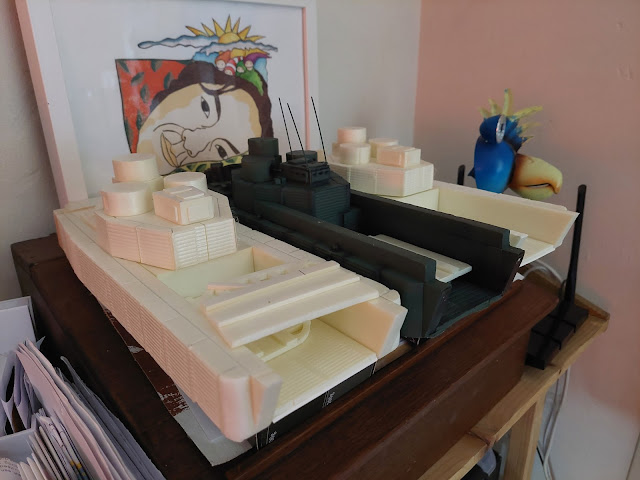
Builds of the 2nd and 3rd hull. Same sizes but simpler designs. Looks the same, but quicker to build. 

First fitting of the monitor bows, more details below. 


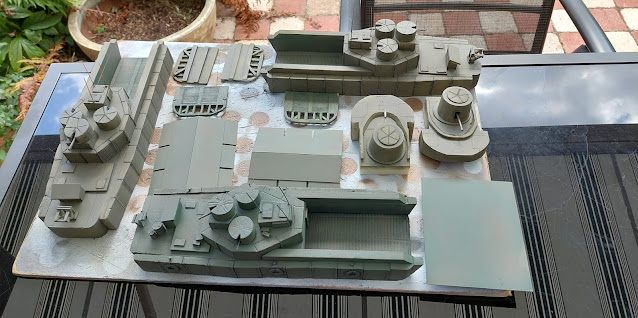
Several parts during painting. 

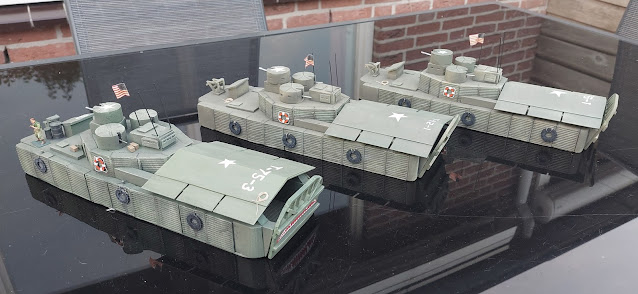
The three hulls configured as landing craft. Details like rope, lifebuoys and stowage added. 


The magnetic fittings of the gun turrets. This is the port .50 cal turret

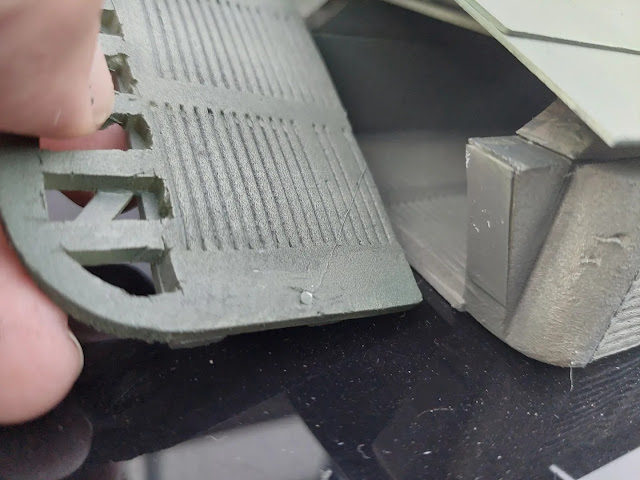
The magnetic fittings in the bay door. The hull holds a small strip of metal. 

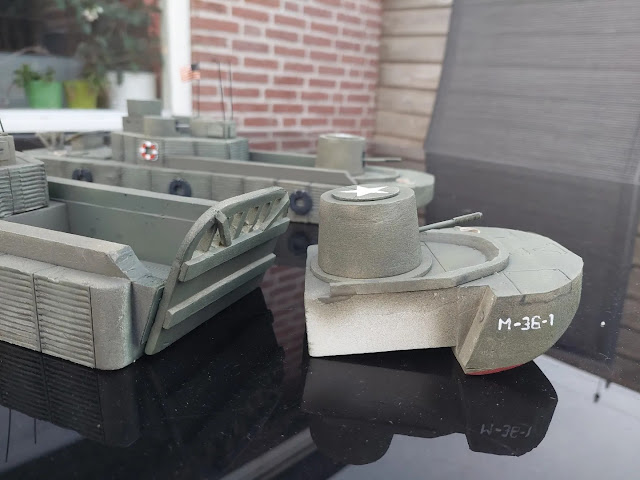
The separate monitor bow next to the fitted bay door. 

Monitor bow before fitting. It has magnets in the left and right inside corners

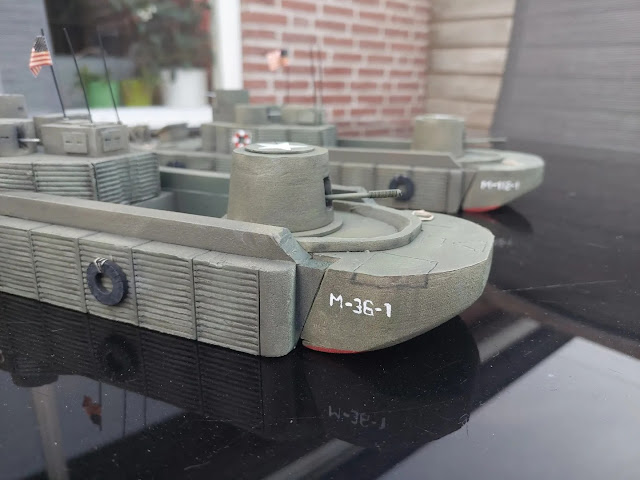
And here it slides and clicks into position. 

The heli deck. 

Here are the hulls as medivac and monitor vessels. Note the mortar pit aft of the large gun turret on the monitor version. This could also hold an AAA gun or a grenade launcher. 


They seem ready to hit the Mekong river.